Sonoma County family court serves residents who need legal decisions on family matters such as divorce, custody disputes, support payments, and restraining orders. The court works within the broader California family court system, applying state family law rules during hearings and mediation sessions. Parents, spouses, and guardians often file petitions here when disagreements affect children or finances. Court staff manage case filings, schedule hearings, and connect families with mediation services. Each case receives review from a judge who determines custody schedules, support obligations, or legal protections.
Family court Sonoma County plays an important role in resolving disputes that affect daily life for families across the county. The family law court in Sonoma County reviews evidence, hears testimony, and applies California statutes before issuing orders. Common cases include divorce proceedings, child custody arrangements, child support orders, spousal support claims, and domestic violence restraining orders. Many families rely on Sonoma family court services to settle disagreements through formal legal procedures. These rulings create enforceable agreements that shape parenting plans, financial responsibilities, and household stability.
How to Search for a Case in Sonoma County Family Court
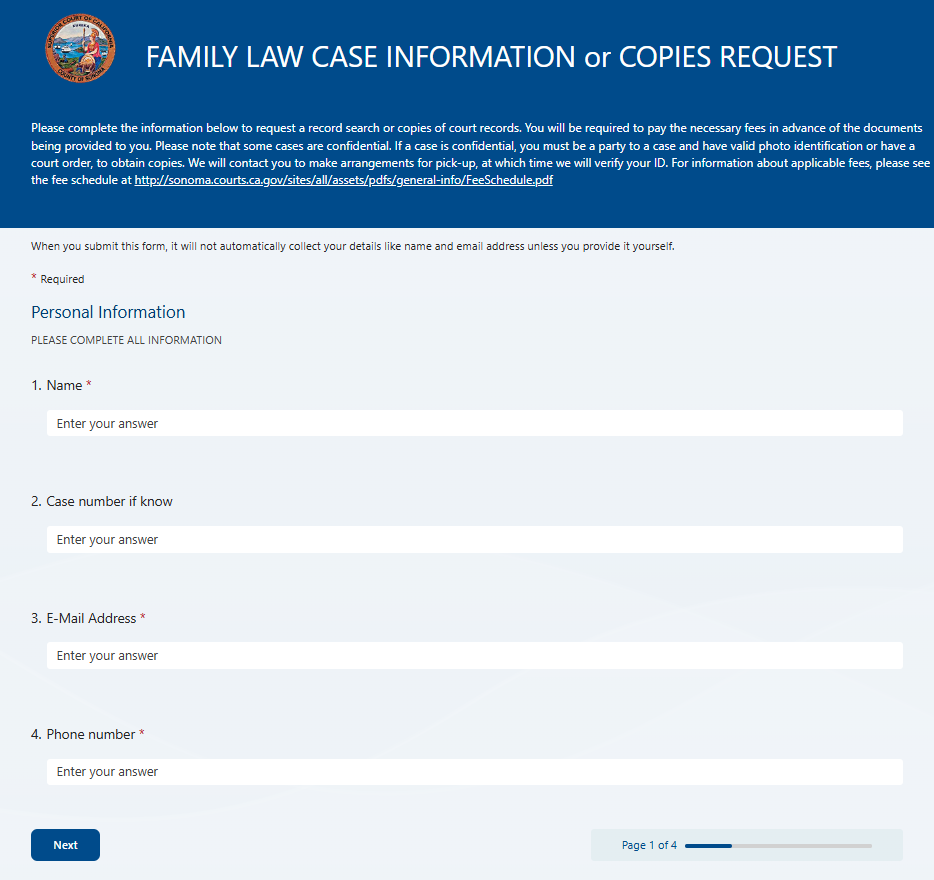
The Sonoma County family court case lookup portal lets users search using different types of information. Entering accurate details improves search results. The website includes a public case portal where users can perform a Sonoma County Court case search. Some family law records may appear limited in public results since courts protect sensitive information related to children, financial data, and domestic violence cases.
Users can search with:
- Case number
- First and last name of a party
- Filing year or date range
Steps to Search for a Family Court Case
Follow these instructions to complete a court case lookup Sonoma County using the official court portal.
- Open the court website: Go to: https://www.sonomacourt.ca.gov
- Locate the Case Portal: On the homepage menu, find the section labeled Online Services or Case Access.
- Select Case Search: Click the link that opens the public case search portal.
- Choose Family Law Case Type: Many courts separate searches by case category. Select Family Law if the option appears.
- Enter search information: Type one of the following:
- Case number
- First and last name of a party
- Filing year
- Run the search: Click the search button to display results.
- Review case results: The system shows matching cases. Select the correct case to view available details.
- Check hearing and status details: The page may show hearing schedules, department numbers, and the current family court case status.
Information You May Need for Case Lookup
Before starting a Sonoma County family law case lookup, collect the details listed below. Accurate data helps the system return the correct case. Some family court records Sonoma County remain restricted. Courts limit certain documents in family law matters to protect minors, financial records, and private safety information. Public search tools still display basic family law case information California courts allow, such as case status and hearing schedules.
Search details:
- Family court case number
- Full legal names of both parties
- Approximate filing year
Types of Cases Handled by Sonoma County Family Court
Family court Sonoma County handles legal disputes that affect spouses, parents, and children. The court reviews many types of domestic relations cases and issues orders that resolve family legal disputes in California. The family law division of the Sonoma County Superior Court manages a wide range of family law cases. These cases often involve divorce filings, custody disagreements, financial support issues, or safety protections. Through Sonoma County family court services, judges apply California family law statutes and issue legally enforceable decisions.
Divorce and Legal Separation
The Sonoma County divorce court processes legal requests to end or separate a marriage. In California law, this process is called a California dissolution of marriage. A divorce case often addresses several legal matters at the same time. These may include division of marital property, child custody, child support, and spousal support. Judges review financial disclosures and settlement agreements before issuing a final judgment. Legal separation works in a similar way. Spouses remain legally married yet receive court orders that address property division, custody arrangements, and financial responsibilities. Many couples choose this option for financial, personal, or religious reasons. Divorce cases form one of the most common family law cases in Sonoma County.
Child Custody Cases
The child custody Sonoma County court manages disputes about where a child lives and how parents share responsibilities. These cases fall under broader custody disputes California courts review. Custody decisions focus on the best interests of the child. Judges evaluate parenting ability, the child’s stability, school location, and family relationships. Many cases involve joint custody arrangements. The court may require mediation sessions before a judge reviews the case. Mediation allows parents to attempt agreement before a formal hearing.
Two main types of custody orders exist:
- Legal custody – authority to make decisions about education, health care, and welfare
- Physical custody – where the child lives
Child Support Orders
The court issues child support Sonoma County orders to help cover a child’s living expenses. These payments help pay for housing, food, medical care, and education costs. California courts calculate support using a statewide formula. The calculation considers several financial factors. These family support orders remain enforceable until the child reaches adulthood or another court order modifies the amount. Parents can request support adjustments if income or parenting schedules change.
Factors include:
- Income of each parent
- Time each parent spends with the child
- Health insurance costs
- Childcare expenses
Domestic Violence and Restraining Orders
The court reviews requests for domestic violence restraining order Sonoma filings when someone seeks protection from abuse or threats. These cases focus on safety within households and relationships. Protective orders may restrict contact, require a person to leave a shared home, and establish temporary custody rules. Law enforcement agencies can enforce these orders across California. A judge may issue different types of family safety orders, including:
- Temporary restraining orders
- Emergency protective orders
- Permanent restraining orders after a hearing
Paternity Cases
Parentage cases determine the legal father of a child. California law refers to this process as establish parentage California. A Sonoma County paternity case often begins when parents were not married at the time of birth. Establishing parentage allows the court to issue custody orders and child support decisions. Once parentage becomes legally established, the court can set custody rights, visitation schedules, and financial support obligations. Courts may review several types of evidence:
- Voluntary declaration of parentage forms
- DNA testing results
- Testimony from parents or witnesses
Filing a Case in Sonoma County Family Court
To file a case in Sonoma County Family Court, a person must complete legal forms, submit them to the court clerk, and follow several required steps under California family law. The filing process begins with identifying the case type and submitting the correct paperwork through the Family Law Division. The process to file a case Sonoma County family court follows rules set by the Sonoma County Superior Court and the statewide California family court filing process. Most family law cases start with a petition that asks the court to review a dispute or request a legal order. Common filings include divorce petitions, custody requests, support cases, and restraining order applications. These cases usually begin with Sonoma County family court forms, which provide the legal information the court needs to open a case file. Below is a simple explanation of the main steps used to start a family law case in Sonoma County.
Determine Case Type
The first step is identifying the correct family law petition Sonoma County requires. Different family matters use different forms. Choosing the correct case type helps avoid delays during filing. Common case types include:
- Divorce or legal separation
- Child custody or visitation
- Child support requests
- Domestic violence restraining orders
- Parentage (paternity) cases
Complete Required Forms
After selecting the case type, the next step is completing the required Sonoma County family court forms. These forms describe the issue and the legal orders being requested. Most forms follow statewide California templates. Many can be downloaded from the court website or obtained at the courthouse self-help center. Accuracy is important during this stage. Missing information may cause the clerk to reject the filing. Typical documents include:
- Petition form that opens the case
- Summons that notifies the other party
- Declaration forms describing the situation
- Financial disclosure forms for support cases
File with the Court Clerk
Once forms are completed, they must be submitted to the clerk of court at the Sonoma County Superior Court. The clerk reviews the documents and assigns a case number. This number identifies the case throughout the legal process. Many filings require a court filing fee. Fee waiver forms may be available for people who qualify based on income. Filing methods may include:
- Filing in person at the courthouse
- Submitting documents through approved electronic filing systems
- Mailing the paperwork to the court clerk
Serve the Other Party
After filing, the law requires the person who started the case to notify the other party. This step is called service of process. The person who completes service must fill out a proof of service form, which gets filed with the court. Service may occur through:
- A professional process server
- The county sheriff
- An adult who is not involved in the case
The documents served usually include:
- The petition
- The summons
- Any supporting declarations
Attend Court Hearings
Once service is complete, the case moves into the court review process. Parties may need to attend several hearings. The judge reviews documents, listens to testimony, and issues court orders that resolve the dispute. Common family court proceedings include:
- Case management conferences
- Custody mediation sessions
- Temporary order hearings
- Final hearings before a judge
Child Custody and Child Support
Child custody Sonoma County and child support Sonoma County cases determine how parents share responsibility for raising their children after separation or divorce. These matters fall under the authority of the Sonoma County Superior Court Family Law Division. Judges review family situations, financial information, and parenting arrangements before issuing legal orders. Sonoma County family court custody and Sonoma County family court child support decisions aim to protect children’s stability, financial care, and long-term welfare through enforceable custody and support orders.
Parenting Plans and Parenting Time
Parenting plans California courts approve describe how parents share parenting time and daily responsibilities after separation. These written plans form part of custody orders issued by the Sonoma County Superior Court. A parenting plan explains the weekly schedule, holidays, school breaks, and transportation arrangements. Judges review these plans to confirm that the child receives consistent care from both parents. Parenting time California schedules often vary depending on the child’s age, school routine, and parents’ work schedules.
- Weekly parenting schedule
- Holiday and vacation schedules
- School pickup and drop-off responsibilities
- Communication rules between parents
- Decision procedures for education and medical care
How Custody and Support Orders Work Together
Custody and support orders often appear within the same family court case. Parenting time affects financial obligations calculated through California child support guidelines. Judges review parenting schedules and income records before issuing final rulings. The court aims to balance caregiving duties with financial support responsibilities. Sonoma County family court custody decisions frequently influence the amount ordered under Sonoma County family court child support calculations.
Modifying Custody or Child Support Orders
Family circumstances often change after a court order, which may lead parents to request modifications. The Sonoma County Superior Court allows parents to request updates to custody or support arrangements through formal filings. Courts review the new situation before approving any changes. Judges review updated financial records, parenting schedules, and the child’s needs before issuing a revised order that replaces the previous ruling.
- Income increase or job loss
- Relocation of one parent
- Major change in parenting schedule
- Health or safety concerns affecting the child
Enforcement of Family Support Orders
Family support orders Sonoma County courts issue carry legal authority and must be followed by both parents. If a parent fails to pay required support, enforcement actions may begin through state child support programs or court procedures. These enforcement methods help maintain consistent payments that support the child’s living expenses. Courts monitor compliance with Sonoma County family court child support orders and may impose penalties for repeated nonpayment.
- Wage withholding from employer payroll
- Interception of tax refunds
- Property liens for unpaid support
- License suspension for serious nonpayment cases
Mediation Services in Sonoma County Family Court
Sonoma County family court mediation helps parents resolve custody disagreements through structured discussions before a judge makes a final decision. These mediation services are provided through the Family Law Division of the Sonoma County Superior Court and focus on creating parenting arrangements that support children’s stability. Mediation services Sonoma County family court programs aim to reduce conflict between parents while encouraging cooperative decision-making. The process allows both parents to meet with a trained mediator who helps them discuss custody issues and parenting schedules. This form of family dispute resolution falls within the broader category of alternative dispute resolution family law methods used across California courts. Mediation often helps parents create agreements faster than traditional court hearings and can reduce stress for children.
Required Custody Mediation in California
California courts require mediation for many custody disputes before a judge reviews the case. In custody mediation California programs, both parents meet with a neutral mediator to discuss parenting time, decision authority, and scheduling issues. The mediator does not act as a judge but helps parents communicate and consider practical parenting arrangements. During a mediation session, parents may discuss topics such as living schedules, transportation arrangements, school decisions, and holiday planning. If both parents reach agreement, the mediator may prepare a written parenting plan for court review. Judges often approve these agreements if they support the child’s well-being and stability. Benefits of mediation services Sonoma County family court programs include:
- Reduced conflict between parents
- Faster resolution compared with extended hearings
- Greater control over parenting schedules
- Focus on the child’s emotional and daily needs
- Opportunity to create flexible parenting arrangements
How to Schedule Mediation
Parents involved in a custody case usually receive mediation instructions after filing court documents with the Sonoma County Superior Court. In many cases, mediation becomes a required step before the custody hearing date. Parents should bring information about the child’s school schedule, health needs, and living arrangements to help develop a realistic parenting plan. Scheduling often follows these steps:
- File a custody or parenting time request with the court
- Receive a mediation referral from the family court clerk
- Schedule a session through the court’s mediation services office
- Prepare documents and parenting ideas before the meeting
Preparing for a Sonoma County Family Court Hearing
A family court hearing Sonoma County process allows parents or spouses to present documents, testimony, and evidence related to their case. Judges review the information, ask questions, and issue temporary or final orders. Proper court hearing preparation helps parties explain their position clearly and avoid delays. Most hearings follow standard family law courtroom procedures, including checking in with the courtroom clerk and waiting for the case to be called before speaking to the judge.
Documents and Evidence to Bring to the Hearing
Anyone attending a Sonoma County family court hearing should bring documents that support their claims or requests. Judges rely heavily on written records and evidence when reviewing family law disputes. Organizing these materials before arriving at court can help the hearing move smoothly and allow the judge to review the information quickly. Each document should be clearly labeled and arranged in order. Many courts expect parties to bring multiple copies so the judge and the other party can review the materials during the hearing.
Common documents and evidence may include:
- Court petitions, responses, and previous orders
- Financial disclosure forms or income records
- Parenting plans or custody proposals
- Text messages or email communications
- School records or medical information for children
Courtroom Etiquette and Hearing Preparation Checklist
People attending a family court hearing Sonoma County should follow respectful courtroom behavior. Judges expect participants to speak politely, stay calm, and present facts clearly. Arriving early helps avoid missing the case call and allows time to organize documents. Dressing neatly and keeping phones turned off also supports proper courtroom conduct. Using a preparation checklist helps families feel more organized and ready for their Sonoma County family court hearing.
A Court Hearing Preparation Checklist can help people prepare before appearing in court.
- Confirm the hearing date, time, and courtroom number
- Bring identification and the case number
- Prepare copies of documents and evidence
- Write key points to explain during the hearing
- Review courtroom behavior and speaking order
Location and Contact Information
This courthouse serves as the primary Sonoma County courthouse family law department where residents file family law documents and attend court hearings. The Santa Rosa CA family court building houses several departments, including family law services, court clerks, and mediation offices. Visitors can file paperwork, check case information, and attend hearings at this location. The courthouse staff helps process documents and direct visitors to the correct courtroom or service desk.
Family Court Address and Contact
The Sonoma County Superior Court family law division address is located in downtown Santa Rosa and serves families throughout Sonoma County.
Sonoma County Superior Court – Hall of Justice
600 Administration Drive
Santa Rosa, CA 95403
United States
Typical Court Hours
Monday – Friday: 8:00 AM – 3:00 PM
Weekends: Closed
Court holidays follow the California state court schedule
Phone Contact
General Court Information: (707) 521-6500
Frequently Asked Questions
Many residents search for clear answers before starting a case in family court. These common Sonoma County family court questions explain key procedures related to custody, support, mediation, and court filings. The answers below reflect processes used in the Family Law Division of the Sonoma County Superior Court.
How do I file for custody in Sonoma County?
Parents begin a custody request by filing paperwork with the Family Law Division of the Sonoma County Superior Court. The process usually starts with a petition or request for order that asks the court to create a custody and parenting schedule. After filing the documents, the other parent must receive official service of the paperwork. Courts often require mediation sessions before a judge reviews the dispute. During hearings, the judge reviews parenting plans, family history, and the child’s needs before issuing custody orders that define legal custody, physical custody, and parenting time.
Where is Sonoma County Family Court located?
Sonoma County family court operates from the Sonoma County Superior Court Hall of Justice, which serves as the main courthouse for family law cases in the county. The courthouse address is 600 Administration Drive, Santa Rosa, California. Residents visit this location to file documents, attend hearings, and use mediation services connected with family law cases. The courthouse includes clerk offices, courtrooms, and family law departments that manage divorce, custody disputes, child support matters, and domestic violence restraining order proceedings. Court staff help direct visitors to filing windows, hearing rooms, and information services.
How long does a family court case take?
The length of a family court case depends on the type of legal issue and whether both parties reach agreements. Some matters resolve within a few months if parents agree during mediation sessions. Divorce cases in California include a mandatory waiting period of six months before the court can finalize the judgment. Custody disputes, financial disagreements, or contested hearings may take longer if several court appearances become necessary. Court scheduling, document preparation, and mediation outcomes all influence how quickly a family law case progresses from filing to final orders.
Do I need a lawyer for family court?
A lawyer is not required to participate in family court proceedings. Many parents and spouses represent themselves when filing for custody, divorce, or support orders. Courts provide official forms, instructions, and self-help services that help people complete paperwork and prepare for hearings. Some parties still choose to hire legal representation when cases involve complicated financial issues, business assets, or highly contested custody matters. Legal professionals can help prepare documents, explain court rules, and present arguments during hearings, which may help parties manage complex legal disputes more confidently.
How is child support calculated in Sonoma County?
Child support in Sonoma County follows statewide California child support guidelines used in all California courts. Judges apply a mathematical formula that considers several financial factors from both parents. These factors include each parent’s income, tax information, and the percentage of time the child spends with each parent. Courts may also review health insurance expenses, childcare costs, and other financial obligations related to the child. After reviewing these details, the judge issues a legally binding support order that sets the monthly payment amount required to support the child’s living needs.